
Emergency Lighting Wiring Guide: A Comprehensive Overview
Emergency lighting is crucial for safety, governed by UK legislation like the Regulatory Reform (Fire Safety) Order and BS 5266 standards.
This guide details wiring, testing, and maintenance for various systems, ensuring compliance and life safety in all building types.
Understanding Emergency Lighting Regulations
Emergency lighting regulations are paramount for ensuring building occupant safety during unforeseen events, primarily fire. In the UK, the Regulatory Reform (Fire Safety) Order places a legal duty on responsible persons to provide adequate emergency lighting.
This isn’t merely a recommendation; it’s a legal requirement. BS 5266 provides detailed guidance on the design, installation, and maintenance of these systems, outlining performance criteria and testing protocols. Compliance ensures effective evacuation routes are illuminated, and escape paths are clearly visible, minimizing risk during emergencies. Understanding these regulations is the first step towards a safe and legally compliant installation.
UK Legislation and Compliance (Regulatory Reform (Fire Safety) Order)
The Regulatory Reform (Fire Safety) Order 2005 is the cornerstone of fire safety legislation in the UK, directly impacting emergency lighting requirements. It mandates that responsible persons ensure the safety of occupants in the event of a fire, which includes providing adequate illumination for escape routes.
Compliance necessitates a thorough risk assessment to determine the appropriate type and placement of emergency lighting. Failure to adhere to these regulations can result in significant penalties. The Order emphasizes proactive fire safety management, demanding regular testing and maintenance of emergency lighting systems to guarantee their functionality when needed.
BS 5266 Standards: A Detailed Look
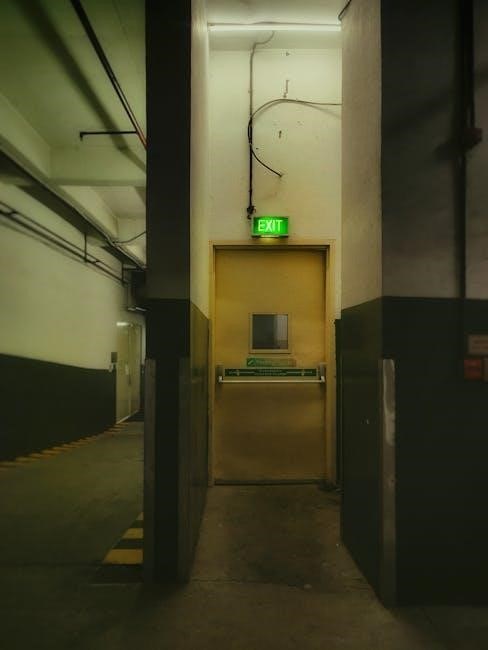
BS 5266 is the British Standard providing comprehensive guidelines for emergency lighting systems. It details luminance levels, testing procedures, and system design, ensuring consistent safety standards across the UK. The standard categorizes emergency lighting into different types, influencing installation requirements.
BS 5266 specifies minimum durations for emergency lighting operation – typically three hours – and defines escape route illumination levels. Adherence to this standard is crucial for demonstrating compliance with the Regulatory Reform (Fire Safety) Order. Regular updates to BS 5266 reflect technological advancements and best practices.
Types of Emergency Lighting Systems
Emergency lighting systems broadly fall into two categories: central battery and self-contained. Central battery systems utilize a centralized power source, offering coordinated operation and simplified testing, ideal for large buildings. However, a single point of failure exists.
Self-contained systems integrate batteries directly into each luminaire, providing independent operation and resilience. These are suitable for smaller premises or as supplemental lighting. Each unit requires individual testing and maintenance. Choosing the right system depends on building size, complexity, and budgetary constraints, always adhering to BS 5266.

Central Battery Systems
Central battery systems feature a central battery pack supplying power to all emergency luminaires during a mains failure. This offers coordinated switching and simplified testing procedures, making them suitable for extensive facilities. Regular battery maintenance and monitoring are vital, as a failure impacts the entire system.
Wiring involves a dedicated circuit from the consumer unit to the battery pack, then distribution to each light fitting. These systems often include monitoring capabilities, providing remote status updates. Compliance with BS 5266 is paramount, ensuring reliable operation and adherence to UK fire safety regulations.
Self-Contained Systems
Self-contained systems integrate a battery and charging circuit directly within each emergency light fixture. This decentralized approach offers flexibility and ease of installation, ideal for smaller buildings or retrofit projects. Each unit operates independently, meaning a failure in one doesn’t affect others, but requires individual testing and maintenance.
Wiring is straightforward – a standard mains supply connected to the luminaire, with the battery providing backup power. Adherence to BS 7671 wiring regulations is crucial. These systems must meet BS 5266 standards for duration and illumination levels, ensuring UK compliance.
Wiring Methods for Emergency Lighting
Emergency lighting wiring demands meticulous attention to safety and compliance with BS 7671 standards. Circuits should be dedicated, minimizing interference and ensuring reliable operation during mains failure. Cable selection is paramount; fire-resistant cabling is often required, particularly in critical areas, to maintain circuit integrity.
Wiring methods vary depending on the system – self-contained or central battery. Proper earthing and circuit protection (MCBs or RCBOs) are essential. Regular inspection and testing, as per BS 5266, are vital to verify the wiring’s condition and continued effectiveness within UK regulations.
Wiring Regulations (BS 7671) and Emergency Lighting
BS 7671, the IET Wiring Regulations, dictates specific requirements for emergency lighting circuits. These include dedicated circuits, appropriate cable sizing based on load and voltage drop, and suitable protective devices like Miniature Circuit Breakers (MCBs) or Residual Current Breakers with Overcurrent protection (RCBOs).
Regulations emphasize the need for reliable switching and control, ensuring automatic operation during power outages. Compliance with BS 7671 is legally mandated in the UK, and adherence is crucial for safety and insurance purposes. Periodic inspection and testing, documented according to the regulations, are essential.
Cable Selection for Emergency Lighting Circuits
Choosing the correct cable for emergency lighting is paramount for reliable operation. BS 7671 dictates cable sizing based on current carrying capacity, voltage drop, and installation method. Typically, PVC/PVC or mineral insulated metal sheathed (MIMS) cables are used, depending on the environment and fire risk assessment.
Consideration must be given to ambient temperature and grouping factors. Fire-resistant cables are often required, particularly in escape routes, to maintain circuit integrity during a fire. Cable selection should also account for mechanical protection and potential damage. Always consult BS 7671 for specific guidance.
Components of an Emergency Lighting Circuit
An emergency lighting circuit fundamentally comprises emergency light fixtures and a reliable power source, typically battery packs and chargers. Light fixtures must be appropriately rated for the environment and provide sufficient illumination levels as per BS 5266.
Battery packs store energy to power the lights during mains failure, with chargers maintaining battery capacity. These components require careful selection based on the duration of emergency lighting needed – a minimum of three hours is standard. Circuit protection, like MCBs, is also vital for safety and functionality.
Emergency Light Fixtures
Emergency light fixtures are specifically designed to illuminate escape routes during power outages, adhering to BS 5266 standards. They come in various types, including recessed, surface-mounted, and exit sign combinations.
Crucially, fixtures must maintain sufficient light output for the required duration – typically three hours – ensuring clear visibility. The choice depends on the building’s layout and aesthetic requirements. Regular inspection confirms proper operation and light levels. LED fixtures are increasingly popular due to their energy efficiency and longevity, contributing to reduced maintenance costs.
Battery Packs and Chargers
Battery packs are the heart of self-contained emergency lighting systems, providing power during outages. They utilize nickel-cadmium or lithium-ion technologies, each with varying lifespans and performance characteristics.
Chargers maintain the battery’s charge, automatically switching to battery power when mains supply fails. Regular testing, as per BS 5266, verifies charger functionality and battery capacity. Fault finding often involves checking voltage levels and identifying signs of corrosion. Proper battery maintenance extends system reliability and ensures consistent emergency illumination for the mandated three-hour duration.

Testing and Maintenance of Emergency Lighting
Testing and maintenance are vital for ensuring emergency lighting reliability. Initial testing, post-installation, confirms correct operation and compliance with BS 5266. This includes duration tests, verifying the three-hour runtime, and light level measurements.
Periodic testing schedules – monthly visual inspections and annual full tests – are legally required. Records must be maintained. Common issues include battery degradation and lamp failures. Regular maintenance extends system lifespan and guarantees functionality during emergencies, safeguarding occupants and meeting legal obligations. Neglecting testing can lead to system failure and potential fines.
Initial Testing and Commissioning
Initial testing after emergency lighting installation is paramount. It verifies the system’s functionality and adherence to BS 5266 standards. This process involves a full discharge test, confirming the emergency light fixtures operate for the mandated three-hour duration without mains power.
Commissioning includes checking light levels, ensuring adequate illumination of escape routes, and verifying the correct operation of battery packs and chargers. Detailed records of these tests, including dates, times, and results, are essential for compliance and future maintenance. Proper commissioning guarantees a reliable system.
Periodic Testing Schedules
Periodic testing of emergency lighting is legally required to maintain system reliability. BS 5266 dictates testing frequencies: monthly functional tests – brief power interruption to confirm operation – and annual full discharge tests, simulating complete power failure for the full three-hour duration.
Detailed records of each test, including date, time, duration, and any observed faults, must be meticulously maintained. These records demonstrate compliance with UK legislation. Consistent adherence to a testing schedule ensures the system will perform as expected during an emergency, safeguarding occupants and meeting legal obligations.
Wiring Diagrams and Schematics
Wiring diagrams are essential for understanding emergency lighting circuit configurations. Simple self-contained systems typically feature a direct connection to the mains supply with a battery backup, illustrated in basic schematics.
Central battery systems, however, involve more complex diagrams showcasing the central battery unit, distribution boards, and individual light fixture connections. Accurate schematics, adhering to BS 7671, are vital for installation, troubleshooting, and future modifications. Clear documentation ensures safe and efficient system operation, aiding qualified electricians in maintaining compliance.
Simple Self-Contained System Wiring
Simple self-contained emergency lights integrate the battery, charger, and lamp within a single unit. Wiring typically involves connecting the live and neutral mains supply to the unit’s designated terminals.
The unit automatically switches to battery power during a mains failure. BS 7671 compliance is crucial, requiring appropriate cable sizing and circuit protection. Testing involves verifying the switchover function and battery duration. These systems are straightforward to install but require periodic checks to ensure reliable operation, maintaining essential safety features in any building.
Central Battery System Wiring Overview
Central battery systems utilize a centralized battery bank and charger supplying power to multiple emergency light fixtures. Wiring involves running DC cables from the central battery unit to each fixture, often using a radial or loop configuration.
BS 7671 dictates cable selection and protection. The central unit requires a dedicated mains supply. Testing includes verifying battery capacity, charger functionality, and individual fixture operation. These systems offer centralized control and monitoring, but installation is more complex than self-contained units, demanding careful planning and execution.
Common Wiring Issues and Troubleshooting
Fault finding in emergency lighting often centers on battery packs. Common issues include failed batteries, charger malfunctions, and loose connections. Regularly check battery voltage and charging current. Circuit breaker trips frequently indicate short circuits or overloads; isolate the circuit and inspect wiring for damage.
Ensure correct cable sizing and avoid overloading circuits. Intermittent faults can be challenging; utilize a multimeter to trace wiring and identify voltage drops. Proper testing and maintenance schedules minimize these problems, ensuring reliable operation during emergencies.
Fault Finding in Battery Packs
Battery pack failures are frequent in emergency lighting systems. Begin by checking the battery voltage; a significant drop indicates a failing cell. Inspect connections for corrosion or looseness, as these impede current flow. Verify the charger is functioning correctly, ensuring it delivers the appropriate voltage and current.
Use a multimeter to test individual battery cells. Look for signs of swelling or leakage, indicating damage. If the pack fails testing, replacement is often the most cost-effective solution. Regular testing and maintenance are vital for preventing unexpected failures.
Identifying and Resolving Circuit Breaker Trips
Frequent circuit breaker trips on an emergency lighting circuit signal an underlying issue. Initially, reduce the load by disconnecting some fixtures to see if the tripping stops. Overloaded circuits are a common cause. Inspect wiring for damage, such as frayed insulation or loose connections, which can create short circuits.
A ground fault, where current leaks to earth, also triggers breakers. Use a ground fault locator to pinpoint the source. If the breaker continues to trip, a faulty battery pack or emergency light fixture may be the culprit, requiring replacement or repair.
Emergency Lighting in Specific Building Types
Emergency lighting requirements vary based on building type. HMOs (Houses in Multiple Occupation) with five or more occupants mandate emergency lighting in communal areas – corridors, stairs, kitchens, and living rooms – ensuring safe evacuation.
Commercial buildings necessitate comprehensive systems covering all exit routes and open areas. Regulations demand a minimum three-hour duration for escape lighting. Complex layouts may require zoned systems for targeted illumination. Regular inspections and testing are vital to maintain compliance and occupant safety within these diverse environments.
HMOs (Houses in Multiple Occupation) Requirements
HMOs housing five or more occupants face stringent emergency lighting regulations. Communal areas – including hallways, stairwells, kitchens, and shared living spaces – must be equipped with functional emergency lighting. This ensures safe evacuation during emergencies, prioritizing tenant safety.
Systems require regular testing and maintenance, documented for inspection. Landlords are legally responsible for compliance with the Regulatory Reform (Fire Safety) Order. Adequate illumination of escape routes is paramount, and systems must operate for a minimum duration, typically three hours, without mains power.
Commercial Building Emergency Lighting
Commercial buildings necessitate robust emergency lighting systems, adhering to BS 5266 standards and the Regulatory Reform (Fire Safety) Order. Comprehensive coverage is vital, encompassing all exit routes, staircases, corridors, and areas with high occupancy.
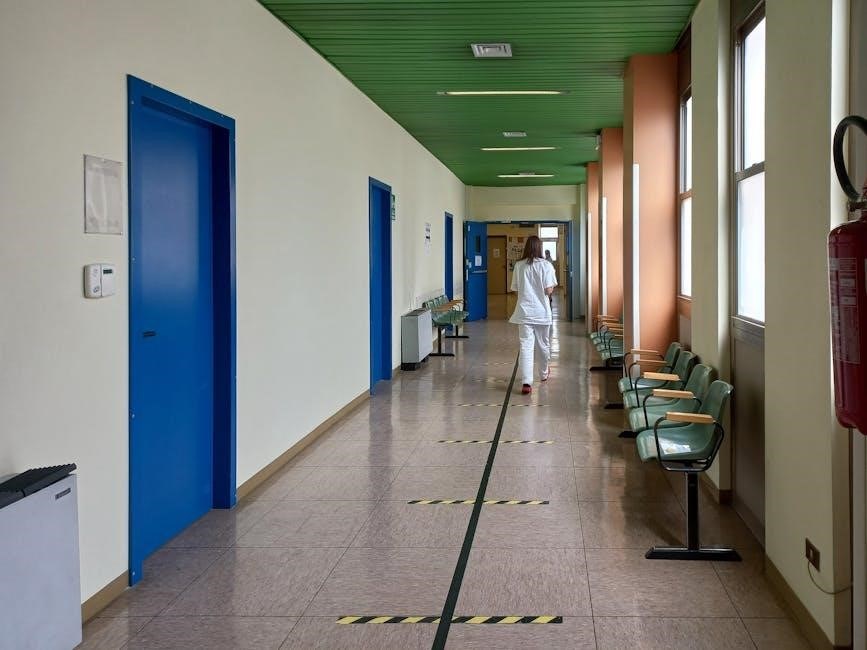
Systems must seamlessly switch to battery power during outages, maintaining illumination for at least three hours. Regular inspections, testing, and maintenance are legally mandated, with detailed records required. Proper cable selection and adherence to BS 7671 wiring regulations are crucial for reliable operation and fire safety compliance within these spaces.
Future Trends in Emergency Lighting Technology
Emergency lighting is evolving with smart systems offering remote monitoring, diagnostics, and automated testing, enhancing efficiency and reducing maintenance costs. LED technology continues to dominate, providing superior energy efficiency, longer lifespans, and reduced carbon footprints compared to traditional lighting sources.
Integration with building management systems (BMS) is becoming increasingly common, enabling centralized control and reporting. Wireless emergency lighting systems are also gaining traction, simplifying installation and reducing wiring complexities. These advancements promise safer, more sustainable, and cost-effective emergency lighting solutions.
Smart Emergency Lighting Systems
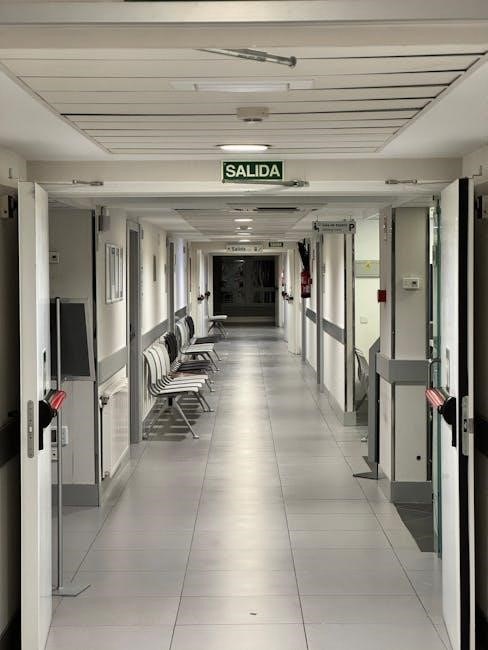
Smart emergency lighting utilizes networked fixtures with integrated sensors and controls, offering significant advantages over conventional systems. These systems enable remote monitoring of performance, automated testing schedules, and real-time fault detection, reducing manual inspection requirements and improving response times.
Data analytics provide insights into system health and energy consumption, optimizing performance and identifying potential issues proactively. Centralized management platforms allow for easy configuration, reporting, and compliance tracking. Integration with building management systems (BMS) further enhances functionality, creating a truly intelligent and responsive safety solution.
LED Technology and Energy Efficiency
LED technology has revolutionized emergency lighting, offering substantial improvements in energy efficiency and longevity compared to traditional fluorescent or incandescent lamps. LEDs consume significantly less power, reducing operating costs and minimizing the load on battery backup systems, extending runtime during power outages.
Their extended lifespan minimizes maintenance requirements and replacement costs. Furthermore, LEDs offer superior light quality and instant-on capabilities, ensuring immediate illumination during emergencies. The reduced heat output of LEDs also contributes to increased safety and reliability, making them the preferred choice for modern emergency lighting installations.