
Hand winches are mechanical devices used for lifting and pulling, operating with a hand-crank for controlled, powerful load management in diverse applications․
What is a Manual Crank Winch?
A manual crank winch is a mechanical advantage tool designed for lifting or pulling substantial loads․ Unlike powered winches, it relies entirely on human power applied through a rotating hand crank․ This rotational force is then transferred, typically via a gearbox, to wind a rope, cable, or chain around a drum․
The core function is to convert the relatively small force applied by a person into a much larger pulling or lifting force․ These winches are valued for their portability, simplicity, and lack of reliance on external power sources, making them ideal for remote locations or situations where electricity isn’t available․ They are commonly employed in scenarios requiring precise control and moderate lifting capacities․
Historical Development of Winches
The concept of winches dates back to antiquity, with early forms utilizing simple mechanisms like capstans and windlasses powered by human or animal labor․ These rudimentary devices were crucial for construction, lifting weights, and maritime activities in ancient civilizations․
Over centuries, designs evolved, incorporating gears and ratchets to enhance mechanical advantage․ The introduction of the manual crank significantly improved efficiency and control; During the Industrial Revolution, advancements in metallurgy and manufacturing led to more robust and reliable winch designs․
While electric and hydraulic winches emerged later, the manual crank winch remained vital for applications demanding portability and independence from power sources, continuing to be refined for specific tasks․
Types of Manual Crank Winches
Manual crank winches come in geared, lever, and differential varieties, each offering unique mechanical advantages and suited for diverse lifting and pulling requirements․
Geared Winches: Understanding the Mechanics
Geared winches utilize a series of gears to multiply the force applied by the operator, enabling the lifting of significantly heavier loads with less effort․ This mechanical advantage is achieved through a reduction in speed; the crank turns more slowly, but with increased torque․ The gearbox, a central component, houses these gears, carefully engineered to optimize power transmission and efficiency․
The gear ratio determines the extent of force multiplication․ A higher ratio means greater lifting capacity but requires more crank rotations to achieve the desired height․ These winches are commonly found in applications demanding substantial pulling power, like positioning heavy equipment or securing loads during transport․ Their robust construction and reliable mechanics make them a staple in various industries․
Lever Winches: Advantages and Applications
Lever winches offer a distinct advantage through their compact design and rapid line speed, achieved via a long lever arm․ This design allows for quick, short pulls, making them ideal for applications requiring frequent adjustments or precise positioning․ Unlike geared winches, they don’t rely on a gearbox, simplifying the mechanism and reducing maintenance needs․
However, lever winches generally have a lower lifting capacity compared to geared models․ They excel in scenarios like rigging, stagecraft, and light material handling on construction sites․ Their portability and ease of use make them valuable tools where space is limited or frequent relocation is necessary․ The quick action of the lever provides efficient control for tasks demanding immediate response․
Differential Winches: High Capacity Lifting
Differential winches stand out for their exceptional lifting capacity, achieved through a unique internal gear system․ This system utilizes two gears of differing diameters, allowing for significant mechanical advantage with relatively less effort from the operator․ They are specifically engineered for heavy-duty applications where substantial force is required․

Unlike geared or lever winches, differential winches excel at consistently moving very heavy loads․ Common applications include vehicle recovery, industrial machinery positioning, and demanding construction tasks․ While they may offer slower line speeds compared to other types, their strength and reliability are paramount․ The complex gearing requires careful maintenance to ensure optimal performance and longevity․

Key Components of a Manual Crank Winch
A winch comprises a drum, cable, gearbox, handle, and pawl system, working together to convert rotational force into powerful pulling or lifting action․
Winch Drum and Cable/Rope
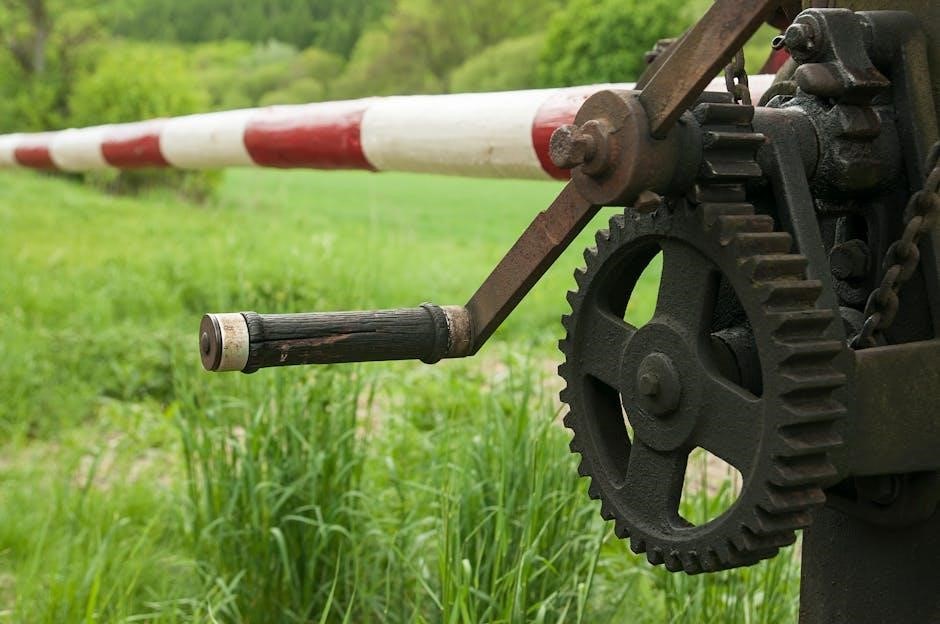
The winch drum is the central component around which the cable or rope winds, providing the mechanical advantage for lifting and pulling operations․ Drums are typically constructed from steel, ensuring durability under heavy loads and consistent performance․ The choice between cable and rope depends on the application; steel cables offer high strength and resistance to abrasion, making them suitable for demanding industrial tasks․
Conversely, synthetic ropes, like nylon or polyester, are lighter, more flexible, and resistant to corrosion, ideal for marine or off-road environments․ Proper spooling of the cable or rope onto the drum is crucial to prevent binding and ensure even load distribution․ Regular inspection for wear, fraying, or damage is essential for maintaining safety and operational efficiency․ The drum’s diameter and width influence the winch’s capacity and speed․
Gearbox and Drive Mechanism
The gearbox within a manual crank winch is a critical element, translating the rotational force from the hand crank into the necessary torque to move heavy loads․ Gear ratios determine the mechanical advantage – a higher ratio provides greater lifting capacity but requires more cranking effort․ These mechanisms typically employ spur gears, known for their simplicity and efficiency in transmitting power․
The drive mechanism connects the gearbox to the winch drum, ensuring smooth and controlled winding or unwinding of the cable or rope․ Lubrication of the gearbox is vital for reducing friction, minimizing wear, and extending the winch’s lifespan․ Regular maintenance, including gear inspection and lubrication, is essential for optimal performance and preventing failures under stress․
Handle and Pawl System

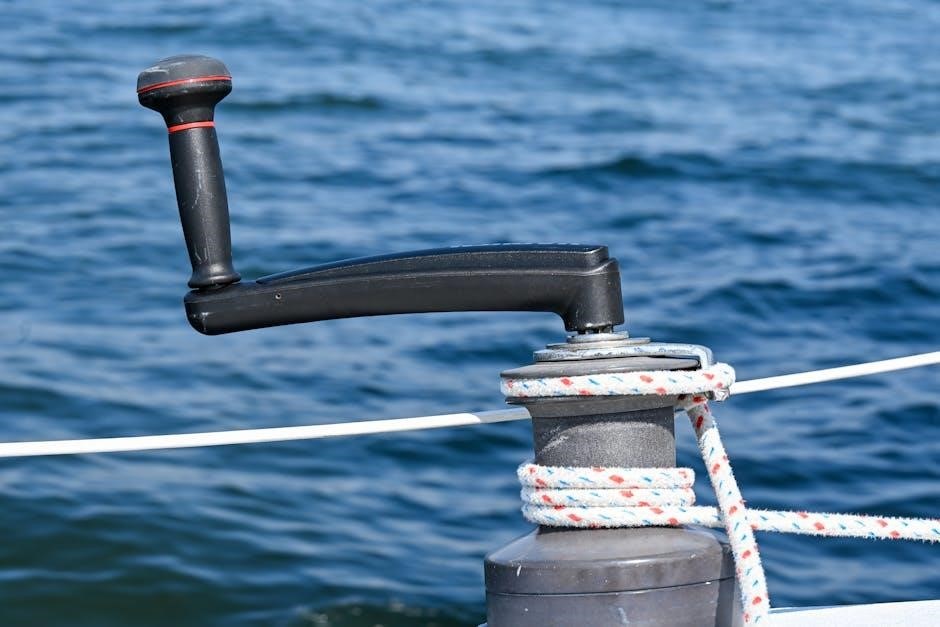
The handle of a manual crank winch provides the user interface for applying rotational force․ Its design often incorporates a comfortable grip to maximize leverage and minimize fatigue during operation․ Connected to the handle is the pawl system, a crucial safety feature preventing the winch from unwinding under load․
The pawl engages with the gear teeth, acting as a ratchet mechanism․ This allows the winch to hold the load securely in one direction while permitting winding in the other․ A properly functioning pawl system is paramount for safe operation, preventing accidental lowering of the load․ Regular inspection of the pawl for wear or damage is essential, ensuring reliable engagement and preventing potential hazards․

Applications of Manual Crank Winches
Hand winches find widespread use on construction sites, in marine settings for boat handling, and for automotive recovery, showcasing their versatility and reliability․
Construction and Building Trades
Manual crank winches are indispensable tools on construction sites, providing a safe and controlled method for lifting and positioning heavy materials․ They are frequently employed to raise scaffolding components, ensuring worker access to elevated areas; Furthermore, these winches facilitate the movement of building supplies like lumber, pipes, and concrete forms, streamlining the construction process․
Their portability and lack of reliance on electricity make them ideal for remote locations or areas with limited power access․ Compared to powered winches, manual versions offer greater precision for delicate placements and reduce the risk of accidental movements․ Regular inspection and maintenance are crucial for ensuring continued safe operation within the demanding construction environment, contributing to overall project efficiency and safety․
Marine and Boating Uses
Manual crank winches are vital for numerous marine applications, offering reliable performance in demanding saltwater environments․ They are commonly used for anchoring, raising and lowering small boats, and deploying or retrieving marine equipment like fenders and water skis․ Their robust construction and resistance to corrosion make them suitable for prolonged exposure to the elements․
Sailboats frequently utilize these winches to manage sails, adjusting tension for optimal performance․ The manual operation provides boaters with precise control, especially crucial during maneuvering in tight spaces or adverse weather conditions․ Regular maintenance, including lubrication and inspection for wear, is essential to ensure the winch’s longevity and safe operation aboard any vessel․
Automotive Recovery and Off-Roading
Manual crank winches are indispensable tools for off-road enthusiasts and automotive recovery professionals․ They provide a self-sufficient means of extracting vehicles stuck in mud, sand, or other challenging terrain, independent of electrical power sources․ Their compact size and portability make them ideal for remote locations where assistance isn’t readily available․
These winches are often used in conjunction with recovery straps and tree savers to safely pull vehicles free․ The controlled, mechanical advantage offered by the crank allows for precise and powerful pulling․ Proper technique and understanding of load limits are crucial for safe operation, preventing damage to vehicles and ensuring the well-being of those involved in the recovery process․

Safety Considerations When Using Manual Winches
Prioritize load capacity and regularly inspect winches for wear; utilize proper techniques to avoid cable snapback and ensure safe, effective operation always․
Load Capacity and Safe Working Load (SWL)
Understanding a manual crank winch’s load capacity and Safe Working Load (SWL) is paramount for safe operation․ The stated capacity represents the maximum weight the winch can handle under ideal conditions․ However, the SWL is a more practical figure, factoring in wear, environmental conditions, and a safety margin․
Never exceed the SWL, as this dramatically increases the risk of cable failure, winch damage, or serious injury․ Always verify the SWL is clearly marked on the winch itself․ Consider dynamic loads – forces created by sudden movements – which can significantly exceed static weight․ Regularly inspect the cable for fraying, kinks, or corrosion, as these compromise its strength and reduce the effective SWL․ Proper cable maintenance is crucial for maintaining the winch’s rated capacity and ensuring operator safety․
Regular Inspection and Maintenance
Regular inspection and proactive maintenance are vital for extending the lifespan and ensuring the safe operation of a manual crank winch․ Before each use, thoroughly examine the cable for signs of wear – fraying, kinking, or corrosion․ Check the gearbox for smooth operation and listen for unusual noises․ Inspect the pawl system to confirm it engages and disengages correctly, preventing accidental load drops․

Lubricate moving parts periodically, following the manufacturer’s recommendations․ Clean the winch after use, removing dirt and debris․ Store the winch in a dry environment to prevent rust․ Address any issues promptly; don’t continue using a damaged winch․ Consistent upkeep minimizes the risk of failure and maintains optimal performance, safeguarding both the equipment and the operator․
Proper Operating Techniques
Proper operating techniques are crucial for safe and efficient winch use․ Always ensure the winch is securely mounted to a stable surface before applying any load․ Avoid exceeding the winch’s stated load capacity – the Safe Working Load (SWL) – to prevent damage or failure․ Maintain a firm grip on the handle and crank smoothly, avoiding jerky motions․
Never stand in the direct line of the cable or rope during operation․ Use appropriate personal protective equipment, including gloves and safety glasses․ When spooling cable, do so evenly to prevent tangling․ Avoid sudden stops or changes in direction while under load․ Understand the pawl system’s function and ensure it’s engaged when holding a load․ Following these guidelines maximizes safety and extends the winch’s service life․

Choosing the Right Manual Crank Winch
Selecting a manual crank winch requires considering capacity, rope length, and gear ratio, alongside material durability, to match specific application needs effectively․
Factors to Consider: Capacity, Rope Length, and Gear Ratio
When selecting a manual crank winch, understanding these factors is crucial․ Load capacity, often expressed as Safe Working Load (SWL), dictates the maximum weight the winch can safely handle․ Rope length determines reach; longer ropes offer greater flexibility but can be slower to operate․
The gear ratio significantly impacts mechanical advantage․ A higher gear ratio requires less force to lift a load, but it also means slower operation and more handle rotations․ Conversely, a lower gear ratio offers faster lifting but demands greater physical effort․
Carefully assess the heaviest load you’ll encounter, the required distance, and your physical capabilities to determine the optimal combination of these three elements for a safe and efficient operation․ Prioritize a winch that comfortably exceeds your typical load requirements․
Materials and Durability
Manual crank winches are constructed from various materials, impacting their longevity and suitability for different environments․ Steel is common for the frame, gears, and drum, offering high strength and resistance to wear․ However, it’s susceptible to corrosion․
Galvanized steel provides enhanced rust protection, ideal for marine or outdoor applications․ Aluminum alloys are lighter, reducing overall winch weight, but may have lower load capacities․ The rope or cable material – often steel wire rope, synthetic rope, or chain – also influences durability․
Look for winches with heat-treated gears for increased strength and resistance to deformation․ A robust build quality and quality materials ensure a longer service life and reliable performance, even under demanding conditions․
Leading Manufacturers and Brands
Several reputable manufacturers specialize in manual crank winches, each offering a range of options for diverse needs․ Fulton is a well-known brand, particularly popular in marine and trailer applications, recognized for reliable, cost-effective winches․
Warn Industries, while famous for electric winches, also produces durable manual options favored for off-road recovery and industrial use․ Ramsey Winch offers a broad selection, including heavy-duty models for construction and demanding tasks․
Other notable brands include Mile Marker, known for its robust construction, and Smittybilt, popular among off-road enthusiasts․ Choosing a recognized brand often ensures quality control, readily available parts, and dependable customer support․